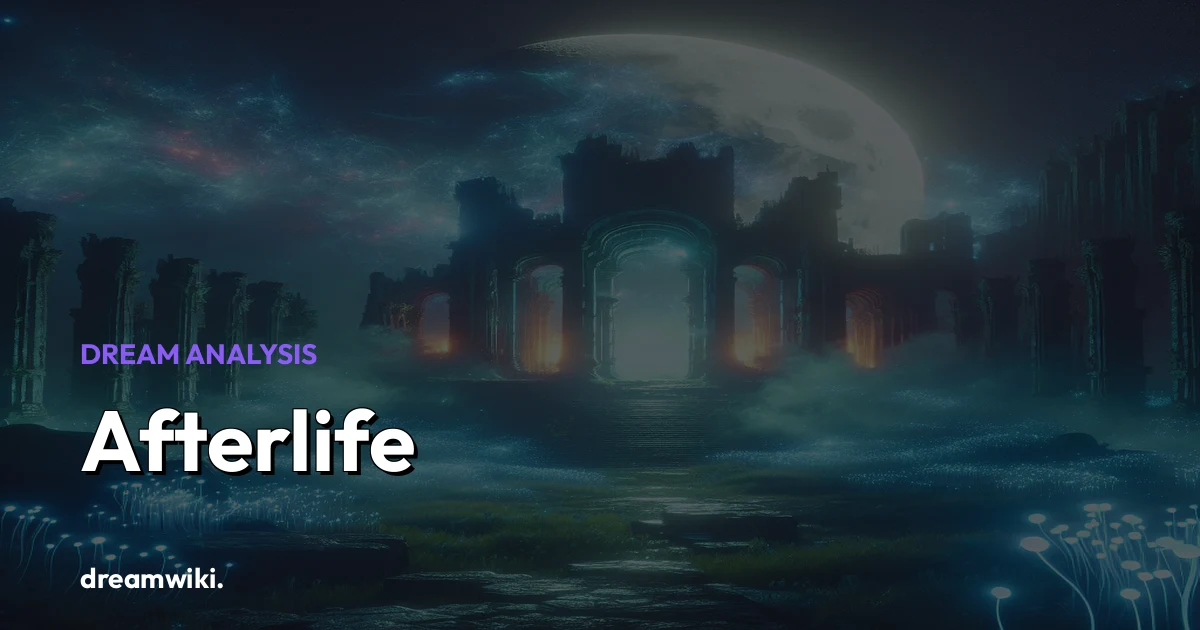
Dreaming of the afterlife can be a profound experience, often intertwined with our deepest fears and desires about existence. In Western esoteric traditions, the afterlife represents not just a continuation but a transformation of the soul. Such dreams may indicate your subconscious mind's attempt to reconcile with the concept of mortality and the unknown. The afterlife, in this context, can be seen as a metaphor for personal transformation or an inner journey toward enlightenment.
Symbolism of Transformation
Transformation is a central theme in dreams of the afterlife. The transition from life to an afterlife realm often symbolizes a significant change or passage in one's life. This could be a new beginning, a psychological rebirth, or the completion of a personal journey. Jungian analysis might interpret this as an archetypal journey into the self, where the dreamer is being called to explore the depths of their psyche and emerge transformed. Such dreams encourage introspection and the acceptance of change as a natural part of life.
Spiritual Evolution and Growth
From a spiritual perspective, dreaming about the afterlife can signify a period of growth or enlightenment. It may suggest that the dreamer is evolving beyond their current state of being. This could involve a shift in values, beliefs, or understanding of the world. The afterlife, as a dream symbol, invites the dreamer to contemplate their spiritual path and the lessons they are learning in their waking life. It can also reflect a desire for connection with a higher power or inner wisdom.
Existential and Unresolved Questions
Such dreams may also arise from unresolved existential questions or fears about death and what lies beyond. Freudian psychoanalysis might view this as a manifestation of subconscious anxieties about the end of life. The afterlife dream can be a safe space for the dreamer to explore these fears and confront the unknown. It serves as a reminder of the impermanence of life and the importance of finding meaning in the present moment. By engaging with these dreams, individuals can gain insights into their own mortality and the values they hold dear.
Ancient Wisdom & Traditional Meaning
In ancient cultures, the afterlife was often depicted as a realm of judgment or reward. For instance, in Egyptian mythology, the afterlife was a journey toward the Hall of Ma'at, where one's heart was weighed against a feather. This symbolizes the soul's purity and readiness for eternal life. Similarly, in Greco-Roman traditions, the afterlife was a place where souls were rewarded or punished based on their earthly deeds. Such myths underscore the moral and ethical dimensions of afterlife dreams, suggesting an evaluation of one's life choices and actions.
Subconscious & Universal Approach
In modern psychological frameworks, dreaming of the afterlife can be interpreted through the lens of Jungian and Freudian theories. Jung might see it as an exploration of the collective unconscious, where the dreamer encounters archetypal symbols representing death and rebirth. Freudian analysis, on the other hand, might suggest these dreams are expressions of repressed fears or desires related to death. Both perspectives offer valuable insights into the transformative potential of afterlife dreams, encouraging a deeper understanding of one's psyche and the mysteries of existence.
No dreams shared yet. Be the first!