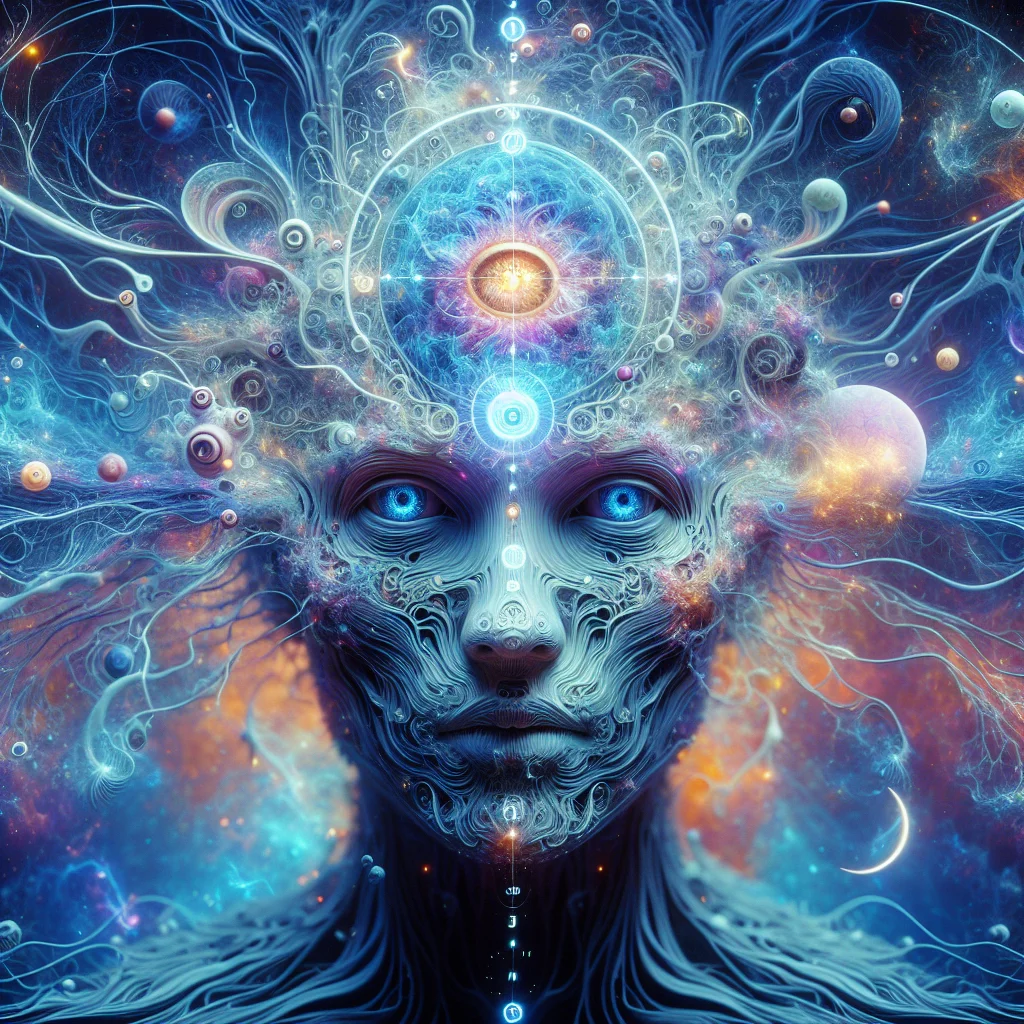
The phenomenon of déjà vu is a perplexing experience that has intrigued both laypeople and scientists alike for centuries. Often described as the eerie feeling that one has lived through the present situation before, déjà vu challenges our understanding of time, memory, and perception. This sensation can be so vivid that it leaves individuals questioning their reality and the nature of their consciousness. Despite its familiarity, the scientific and philosophical explanations for déjà vu remain elusive and multifaceted.
Déjà vu, derived from French, meaning 'already seen,' is more than just a fleeting moment of recognition. It invites deep introspection and curiosity about the workings of the human mind. While some attribute it to neurological anomalies, others delve into the realms of parallel universes and esoteric philosophies to find answers. In this exploration, we will unravel the intricacies of déjà vu through the lenses of neurology, psychology, and the speculative theories about parallel realities.
The Neurological Basis of Déjà Vu: Brain Signals and Memory Overlaps
Neurologists have long sought to understand the brain mechanisms behind déjà vu. One prevailing theory suggests that it is a result of a miscommunication between the sensory cortex and memory systems. When the brain processes a new experience, there might be a slight delay in the synchronization between the temporal lobe, responsible for processing time and memories, and the rest of the brain. This delay can cause the brain to perceive a new experience as a familiar one.
"Déjà vu is the mind's attempt to reconcile an anomaly in perception, creating the illusion of familiarity where there is none." - Dr. Evan Thompson
Furthermore, research has indicated that déjà vu could be linked to the temporal lobe's role in memory formation. The hippocampus, a critical region for memory processing, may inadvertently trigger a false memory signal when processing new information. This misfiring can lead to the sensation that the current moment has been lived before, even though it has not.
Parallel Universe Theories: A Multiverse of Possibilities
Beyond the neurological explanations, some theorists propose that déjà vu might be evidence of parallel universes. According to the multiverse theory, countless universes exist simultaneously, each with slight variations of our own reality. Déjà vu, in this context, could be a momentary overlap between our universe and another, where similar events are unfolding.
Could Déjà Vu Be a Glimpse into a Parallel Life?
Advocates of the parallel universe hypothesis suggest that déjà vu might occur when there is a brief alignment between our consciousness and that of our counterpart in a parallel universe. This theory posits that our soul or consciousness may be interconnected across multiple dimensions, allowing for experiences from one universe to bleed into another. While speculative, this explanation provides a fascinating perspective on the phenomenon, inviting us to reconsider the limits of our reality and consciousness.
Critics of the parallel universe theory argue that it lacks empirical evidence and remains largely in the realm of science fiction. However, it serves as a compelling narrative for those intrigued by the possibilities of a multiverse and the interconnectedness of all things.
Mythical and Cultural Interpretations of Déjà Vu
Culturally, déjà vu has been interpreted in various ways across civilizations. Some cultures view it as a sign of precognition or a hint of one's spiritual path aligning with destiny. In ancient Greek mythology, the concept of 'anamnesis' referred to the soul's ability to recall knowledge from past lives, which resonates with the idea of déjà vu as a memory from a previous existence.
- In Hindu philosophy, déjà vu is sometimes linked to the concept of 'samsara', the cycle of life, death, and rebirth, suggesting that these experiences are echoes of past lives.
- Western esoteric traditions often consider déjà vu as a moment of spiritual awakening or an indication of one's intuitive abilities, providing insight into the subconscious mind.
- In Freudian psychoanalysis, déjà vu might be seen as a manifestation of repressed memories or desires surfacing into consciousness.
Despite the variety of interpretations, déjà vu remains an enigma that transcends scientific explanation, inviting us to explore the boundaries between reality, memory, and imagination.